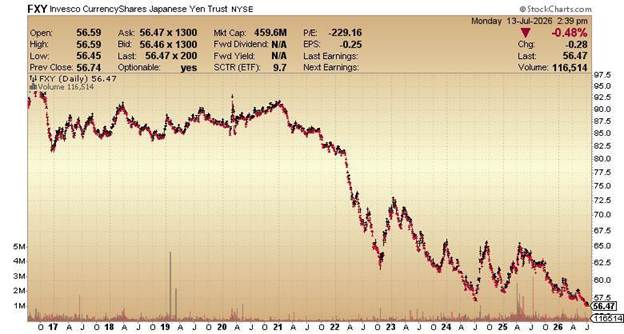
One thread from the complex sweater that is global finance to keep an eye on is the reversal of the Japanese yen carry trade. As a refresher, for decades investors have been conditioned to borrow in cheap, low-interest yen, buy foreign assets (U.S. assets) that yield or earn more, then eventually sell them and pay off those yen loans at a profit. A declining yen gives the carry trade an additional boost to profits. Sell dollar assets at higher prices, convert those dollars into a cheaper yen (getting more yen), then pay off the loan with money left over from both the investment and the currency gain.
Here’s a summary of events that could cause that whole scheme to reverse…
- Perception around the Iran conflict shifts from a temporary skirmish to a lasting, more serious conflict.
- Durably higher energy prices create energy shortages for an import-dependent Japan.
- The yen continues to fall against the dollar. (It’s already under heavy pressure.)
- This makes all imports more expensive and begins to get “existential.”
- Japan intervenes with “whatever it takes” to strengthen the yen.
- The carry trade becomes highly uncertain with higher Japanese borrowing rates and the potential for significant losses on currency reconversion.
- This accelerates an unwind of foreign-held long positions as capital flows back to Japan.
It’s worth noting that this could affect all broadly held assets, including Treasuries, but would likely be very supportive of commodities and less negative for thinly held assets. The deep commodity selloff has corresponded with the recent yen decline and dollar rise, so it’s not unreasonable to expect that to reverse if the currency relationship reverses.
Something to watch as this situation becomes more serious for overseas, energy-dependent nations like Japan.
Yen: